

What the UP–NS Merger Could Mean
All Industry News
How the End of the $800 Tariff Exemption Is Reshaping Cross-Border Shipping
How the End of the $800 Tariff Exemption Is Reshaping Cross-Border Shipping and What It Means for U.S. Supply Chains
For decades, millions of low value shipments entered the United States without triggering customs duties. That long standing policy, known as the de minimis exemption, allowed goods valued at $800 or less to clear U.S. Customs without tariffs. It quietly became a foundational element of global e-commerce, enabling foreign sellers to ship directly to American consumers with minimal friction.
That era has now ended.
In 2025, the United States officially closed the de minimis loophole. First applied to goods from China in May and later extended to all countries in August, the change has introduced a new reality for importers, retailers, carriers, and consumers. Duties are now assessed on shipments that previously passed through tariff free, often catching buyers and sellers by surprise.
At Century Express Virginia, we see this shift as more than a consumer headline. It represents a structural change in how international goods move into the U.S. market. As sellers adapt, supply chains are being reconfigured, port activity is shifting, and inland logistics strategies are evolving.
This article looks at what the end of the de minimis exemption means for shipping operations, how foreign sellers are adjusting, and why U.S. ports and logistics providers are becoming more important than ever.
What Changed and Why It Matters
The de minimis exemption was originally designed to simplify customs processing for low value goods. Over time, it became a powerful driver of cross border e-commerce. Millions of packages entered the U.S. daily under this rule, often shipped directly from overseas fulfillment centers to American doorsteps.
Policymakers from both parties supported ending the exemption. They argued it allowed large foreign sellers to sidestep tariffs, undermined domestic manufacturers, and created enforcement gaps at the border. Once the policy ended, U.S. Customs and Border Protection began assessing duties on shipments that would previously have cleared without charge.
The impact was immediate. Consumers began receiving unexpected duty bills from carriers before delivery. Express carriers, postal networks, and customs brokers were suddenly required to process a much higher volume of formal entries. According to Customs and Border Protection, tens of millions of shipments have already been assessed, generating hundreds of millions of dollars in duties.
For logistics professionals, this shift signals something important. The era of frictionless direct to consumer imports is giving way to more structured, compliance driven import models.
How Foreign Sellers Are Rethinking Their U.S. Strategy
Faced with higher costs and customer dissatisfaction, foreign sellers are changing how they serve the U.S. market. One of the most significant trends is a return to bulk shipping and domestic distribution.
Instead of shipping individual parcels from overseas, many sellers are now moving inventory into the United States in larger consolidated shipments. Duties are paid at the border, and goods are stored in U.S. warehouses before being delivered domestically. This approach reduces surprise costs for consumers and creates more predictable delivery timelines.
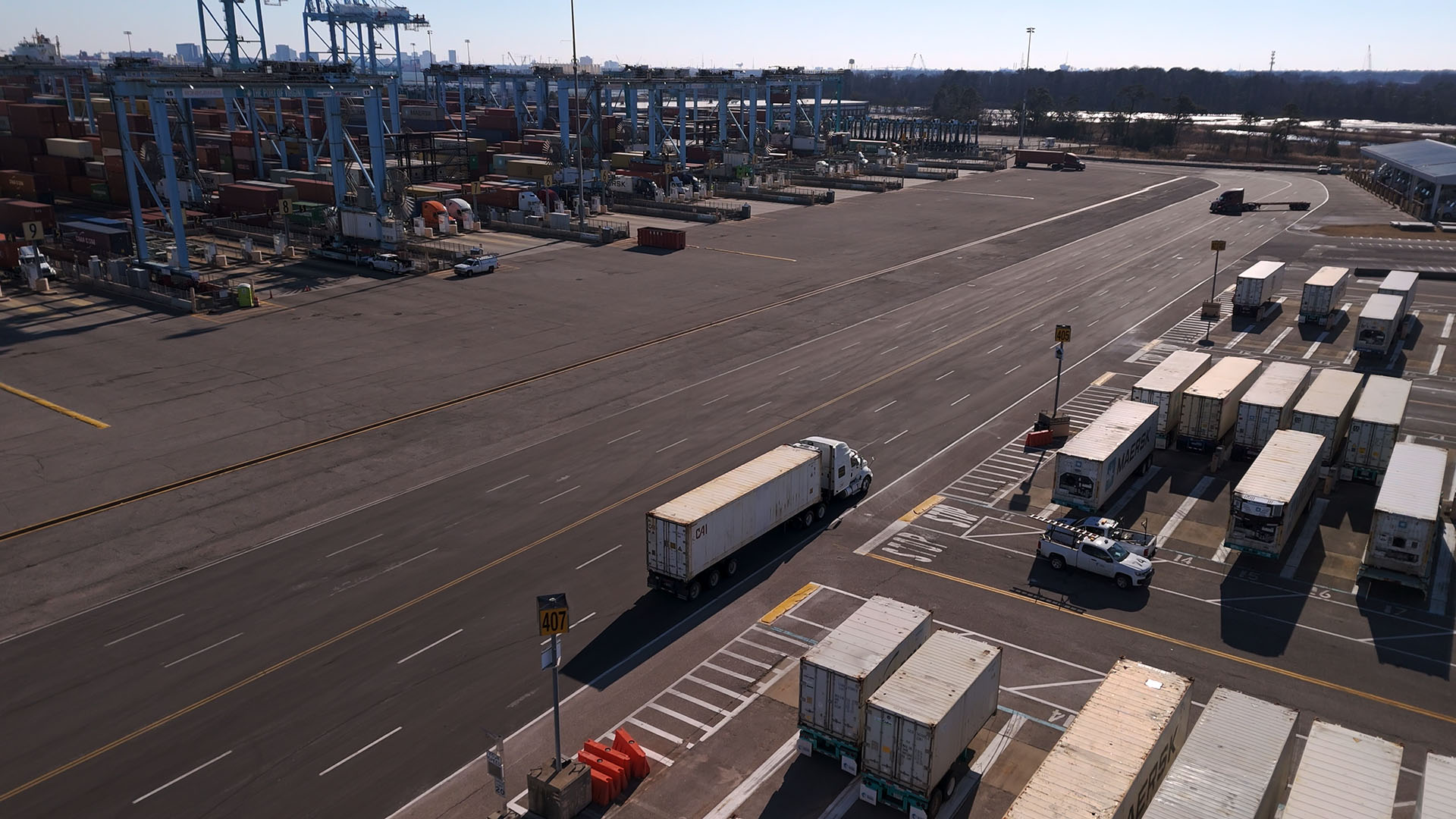
This shift places new emphasis on port operations and inland logistics. Bulk imports require reliable port drayage, efficient container handling, and flexible storage solutions. At the Port of Virginia, these changes are already influencing how freight flows through terminals and distribution networks.
Century Express Virginia supports this transition through comprehensive port drayage services, helping importers move containers efficiently from the terminal to warehouses and distribution points. For sellers bringing temperature sensitive goods into the U.S., our reefer drayage solutions ensure cold chain integrity from vessel to final destination.
Rail, Transloading, and the Rise of Inland Distribution
As sellers move away from direct parcel shipping, inland transportation becomes more strategic. Rail connected ports and transloading facilities are playing a larger role in optimizing costs and reach.
Importers increasingly rely on rail drayage to move containers inland efficiently, especially when distributing inventory across multiple regions. Transloading allows cargo to be shifted from international containers into domestic trailers, creating flexibility for regional fulfillment.
Century Express Virginia provides integrated transloading services that help importers adapt to this new environment. By repositioning inventory closer to end customers, sellers can reduce per unit shipping costs while maintaining compliance with U.S. customs regulations.
For goods that require specialized handling or nonstandard equipment, our specialized equipment services support a wide range of cargo types, including oversized, irregular, and high value freight.
The Impact on Carriers and Customs Processing
The end of the de minimis exemption has also reshaped the role of carriers. Express carriers like UPS and FedEx now find themselves collecting duties from customers or managing more complex customs workflows. Postal networks have faced even greater disruption, as many lacked the infrastructure to collect duties at scale.
This has reinforced the importance of accurate documentation, tariff classification, and customs coordination. Errors in declared origin or product classification can result in unexpectedly high duty assessments, delays, or disputes.
For shippers moving regulated materials, compliance becomes even more critical. Century Express Virginia supports these needs through compliant hazmat drayage services, ensuring hazardous cargo moves safely and in accordance with federal and port specific requirements.
Why U.S. Ports and Domestic Logistics Matter More Than Ever
As foreign sellers reorient toward bulk imports and domestic fulfillment, U.S. ports are becoming strategic gateways rather than simple transit points. Ports with strong infrastructure, efficient rail access, and modern terminals are best positioned to absorb this shift.
The Port of Virginia stands out as a high performing gateway with deep channels, on dock rail, and strong inland connectivity. These advantages allow importers to clear customs, reposition inventory, and distribute goods with greater predictability.
Century Express Virginia plays a key role in this ecosystem. In addition to drayage and transloading, we provide yard facility and container storage solutions that give importers flexibility when managing inventory surges or timing challenges.
For cargo that exceeds standard weight or dimension limits, our heavy cargo permitting services help shippers navigate regulatory requirements and move freight without delays.
What Shippers and Retailers Should Be Thinking About Now
The end of the de minimis exemption is not a temporary disruption. It represents a long-term shift in how international trade is regulated and enforced. Shippers and retailers should be asking several key questions:
- Are duty costs being calculated accurately at the point of sale or import?
- Is inventory positioned in a way that minimizes surprise fees and delivery delays?
- Are logistics partners equipped to handle compliance, documentation, and port coordination?
- Does the supply chain rely too heavily on direct parcel imports that are no longer cost effective?
Answering these questions requires close coordination between sellers, customs specialists, carriers, and logistics providers. It also requires choosing partners who understand port operations and inland distribution.
A Century Express Virginia Perspective
At Century Express Virginia, we view this moment as a turning point. As global trade rules tighten, supply chains that prioritize transparency, compliance, and flexibility will be best positioned to succeed.
Our team supports importers navigating these changes by offering end-to-end port and inland logistics solutions. From drayage and rail connectivity to transloading, storage, and specialized handling, we help customers adapt to evolving trade policies while keeping freight moving.
To learn more about our capabilities and how we support importers across industries, visit our About Century Express page or explore our full range of services across centuryexpress.com.
As trade policies continue to evolve, one thing remains constant. Reliable logistics partners make the difference between disruption and resilience.