
CDL School Closures Are Tightening the Truck Driver Pipeline
Freight Fraud: How Double Brokering and Fictitious Pickups Are Targeting the Supply Chain
All Industry News
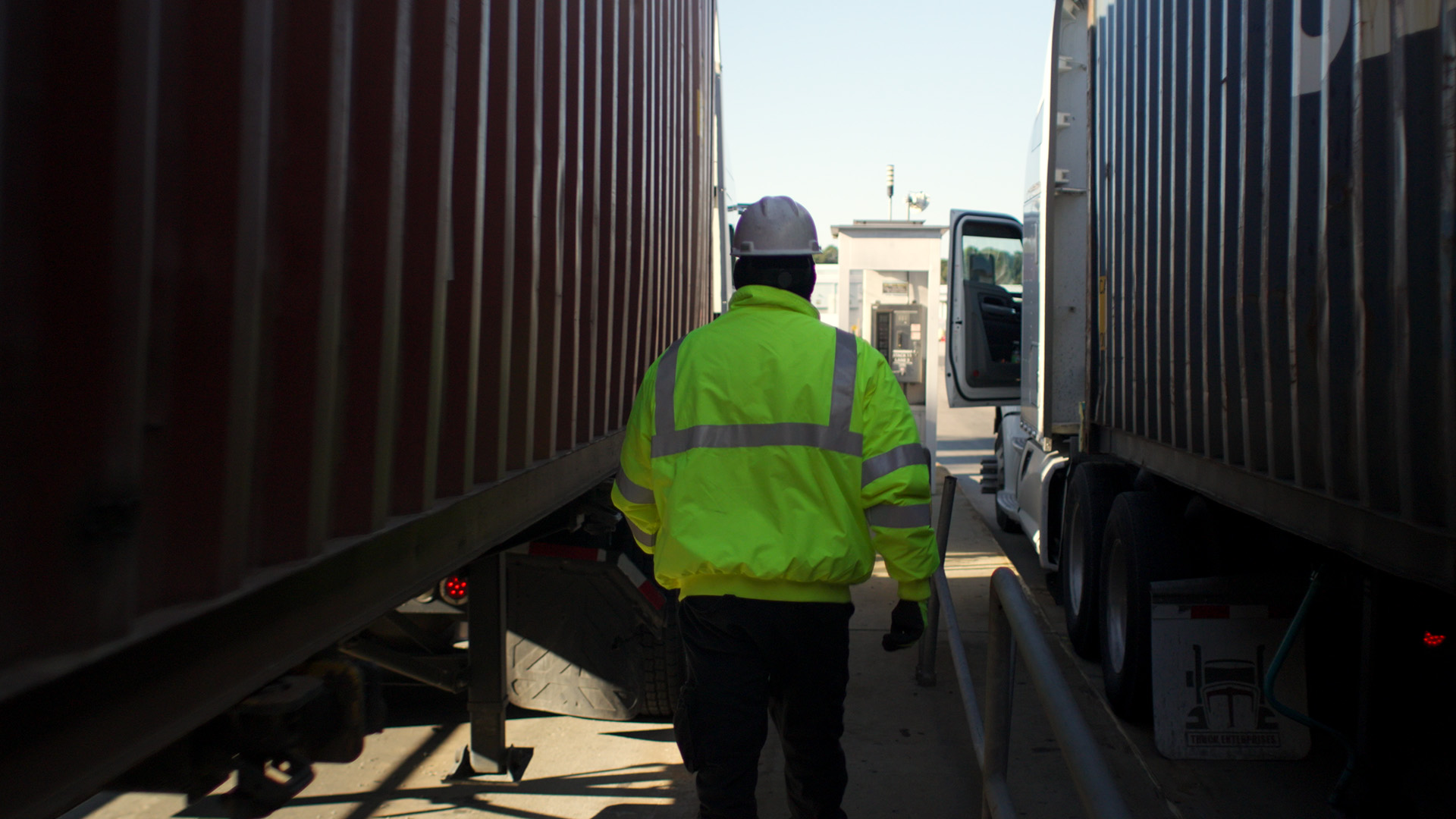
CDL School Closures and Regulatory Change Are Tightening the Truck Driver Pipeline
The truck driver shortage has been a persistent headline in the freight industry for years. What is different in 2026 is the source of the pressure. Rather than the familiar story of an aging workforce and insufficient recruitment, the driver pool is now being squeezed from two new directions simultaneously: a federal crackdown on CDL training schools that has shuttered more than 550 programs nationwide, and a pair of regulatory changes that are removing tens of thousands of licensed commercial drivers from the eligible workforce. Both developments are landing at precisely the moment import demand at major U.S. ports, including the Port of Virginia, is rising.
For shippers, BCOs, and logistics operators who depend on drayage capacity to move containers through Hampton Roads, understanding the structural forces reshaping the driver pool is no longer background reading. It is operational planning.
More Than 550 CDL Training Schools Have Been Forced to Close
In February 2026, the U.S. Department of Transportation confirmed that more than 550 commercial driver’s license training schools had been shuttered following an FMCSA enforcement action. The closures were the result of a sweeping compliance review targeting what the agency described as substandard training operations, programs that collected thousands of dollars in tuition, handed graduates paperwork that met the minimum letter of the law, and sent them onto the road without adequate preparation.
The Entry-Level Driver Training rule, which took effect in February 2022, set minimum standards for CDL training programs and required instructors and facilities to register with FMCSA. The 2026 enforcement wave represents the follow-through: programs that registered but failed to meet the underlying standards during in-person inspections were ordered to close. According to the Department of Transportation, investigators visited programs in person to verify compliance with federal safety standards, and hundreds failed that review.
The immediate effect is a narrowing of the new-driver pipeline. Each class of CDL graduates that does not emerge from a shuttered school is a cohort that was never trained. For carriers who rely on new CDL holders to fill seats vacated by retirements and turnover, the closures compound a recruitment problem that was already severe. Industry analysts at ELDT Nation noted that training and testing bottlenecks that created backlogs in prior years showed up two to three years later as thin bands of mid-experience candidates, drivers with one to two years of tenure who would normally be filling co-driver and regional roles. The 2026 school closures are producing the same structural lag in a different part of the pipeline.
A March 2026 Federal Rule Is Removing Drivers Already Behind the Wheel
While the school closures reduce the flow of new drivers entering the workforce, a separate regulatory action is shrinking the pool of drivers already in it. A federal rule that took effect in March 2026 prohibits asylum seekers, refugees, and DACA recipients from obtaining or renewing commercial driver’s licenses. The Department of Transportation cited compliance concerns and the need for stricter licensing standards as the basis for the change.
Foreign-born drivers account for roughly one in six commercial truck drivers in the United States, according to industry data cited by PLS Logistics. The new rule, combined with a Department of State pause on employment visas for commercial truck drivers and tighter English-language proficiency enforcement that is sidelining an estimated 5,000 additional drivers per month, represents a compounding regulatory squeeze. CDL Advantage, which tracks workforce data for the trucking industry, reported that the DOT’s elimination of non-domiciled CDLs alone could remove up to 200,000 drivers from the workforce over the next two years.
State-level renewal data is beginning to reflect the impact. O Trucking reported in June 2026 that Texas DPS recorded a 31 percent decline in CDL renewals in April compared to the same month in 2025, with California DMV tracking a similar 26 percent drop. These are not projections. They are enrollment and renewal numbers already showing up in state databases.
The Five Pressures Narrowing the Driver Pool in 2026
The following table summarizes the concurrent forces reshaping driver availability this year.
|
Pressure Point |
What Changed |
Estimated Driver Impact |
|
CDL School Closures |
550+ training schools shuttered by DOT FMCSA enforcement action, Feb. 2026 |
Pipeline of new CDL graduates reduced; exact cohort gap still being measured |
|
CDL Immigration Rule |
March 2026 federal rule bars asylum seekers, refugees, and DACA recipients from obtaining or renewing CDLs |
Up to 200,000 CDL holders potentially removed from the workforce over two years |
|
English Proficiency Enforcement |
FMCSA stricter enforcement of English language proficiency rules for commercial drivers |
An estimated 5,000 additional drivers sidelined per month |
|
Aging Workforce Retirements |
Ongoing demographic trend; no significant offset from new entrants at current rate |
ATA projects shortage to reach 160,000-175,000 drivers by 2028 (revised April 2026) |
|
BLS Payroll Revision |
Feb. 2026 Bureau of Labor Statistics annual revision erased 122,000 previously counted trucking positions |
Real active driver count lower than previously estimated; gap wider than headline figures |
What the Shortage Numbers Actually Look Like Right Now
The American Trucking Associations currently estimates roughly 60,000 unfilled driver seats in the United States. In April 2026, the ATA quietly revised its 2028 projection upward from 160,000 to 160,000-175,000 drivers and moved the timeline forward by approximately six months, according to O Trucking’s June 2026 industry report. The Bureau of Labor Statistics added further dimension in February 2026 when its annual payroll revision erased 122,000 previously counted trucking positions from its records, suggesting the actual active driver count has been running lower than headline figures for some time.
Large carrier turnover remains between 90 and 95 percent annually. Replacing a single driver costs an estimated $8,234 to $20,729 per departure according to ATRI data, meaning the retention math is as damaging as the recruitment math. The industry would need to recruit approximately 120,000 new drivers every year for the next decade just to replace retirements, absorb freight growth, and offset ongoing churn. That pace has never been achieved.
Why This Matters Specifically at the Port of Virginia
The driver pool pressures described above are national in scope, but their effects are not uniformly distributed. Port-adjacent drayage markets operate under tighter capacity constraints than general truckload freight because the work requires terminal authorization, specialized equipment knowledge, and familiarity with gate procedures that general market drivers do not bring from day one. When the national driver pool shrinks, the qualified drayage pool shrinks faster.
At Norfolk International Terminal and Virginia International Gateway, the timing is particularly sharp. Import volumes at the Port of Virginia have been trending upward through the first half of 2026, and peak season freight typically intensifies container throughput in the third and fourth quarters. A tighter driver pool arriving into a busier port period means two things for shippers: longer lead times to secure a drayage appointment, and greater exposure to demurrage charges when containers cannot be moved before the last free day.
For a closer look at how demurrage and detention fees accumulate when pickup timelines slip, the guide to demurrage vs. detention charges explains how the clock works at the terminal level and what steps reduce exposure.
The regional driver shortage landscape is also uneven within Virginia. PLS Logistics noted in its May 2026 analysis that the Southeast is experiencing some of the most pronounced regional imbalances in driver availability, and Hampton Roads, as a high-density port market with premium demand for specialized drayage capacity, sits squarely in that pressure zone.
What Port Shippers Can Do to Protect Capacity
The structural forces narrowing the driver pipeline are not short-term disruptions. The cohort gaps created by school closures will take two to three years to move through the system. The regulatory changes affecting foreign-born drivers are embedded in federal rulemaking, not market cycles. Shippers who plan as though normal capacity will return in the next quarter are likely to be caught short.
- Book drayage partners early and maintain continuity. In a tightening driver market, carriers with established shipper relationships prioritize known accounts. Spot market drayage during high-demand periods becomes progressively harder to source as driver availability declines.
- Monitor your containers’ last free days more closely than usual. When driver availability is constrained, the margin for error between LFD and actual pickup shrinks. A container that would have been an easy same-day pickup in a normal market becomes a two-day scheduling exercise when your carrier has fewer available drivers.
- Consider yard storage as a buffer for containers approaching their LFD. Moving a container off-terminal into a secure yard preserves free time and removes it from demurrage exposure while your receiving location prepares. In a constrained driver market, this flexibility is more valuable than it has been in recent years.
- Evaluate your drayage carrier’s driver stability. A carrier with low driver turnover and a tenured driver network is better positioned to maintain consistent service levels during a capacity squeeze than one dependent on rotating new hires. Driver continuity at the carrier level is a direct hedge against market-wide driver pool volatility.
- For regulated cargo that requires specific credentials, plan further in advance. Hazmat drayage moves require drivers with endorsements that cannot be quickly substituted. In a tighter driver market, availability for endorsed moves becomes the first constraint.
A Stable Driver Network at the Port of Virginia
Century Express Virginia has operated continuously at the Port of Virginia since 2007. The company maintains some of the lowest driver turnover rates in the Hampton Roads region, a distinction that is directly relevant in the current environment. When market-wide driver availability tightens, operations built on a stable, tenured driver network hold their service levels in ways that high-turnover operations cannot.
The team is accessible seven days a week, and the dual yard facilities in Norfolk and Portsmouth provide shippers with the flexibility to move containers off terminal quickly when timing is tight. For shippers managing a growing volume of port freight through NIT and VIG, having a port drayage partner with proven driver continuity is not a nice-to-have in this market. It is the difference between a container that makes its appointment and one that doesn’t.
For a broader look at the forces reshaping driver capacity, read the related post on the truck driver shortage and what it means for Port of Virginia shippers.
Let Century Express Virginia help you navigate capacity uncertainty at the Port of Virginia. The team is accessible seven days a week at (757) 494-9200, or reach out through the contact page.