
What Is Drayage? A Guide for Port Shippers
What Is Drayage? A Guide for Port Shippers
CE Dispatch
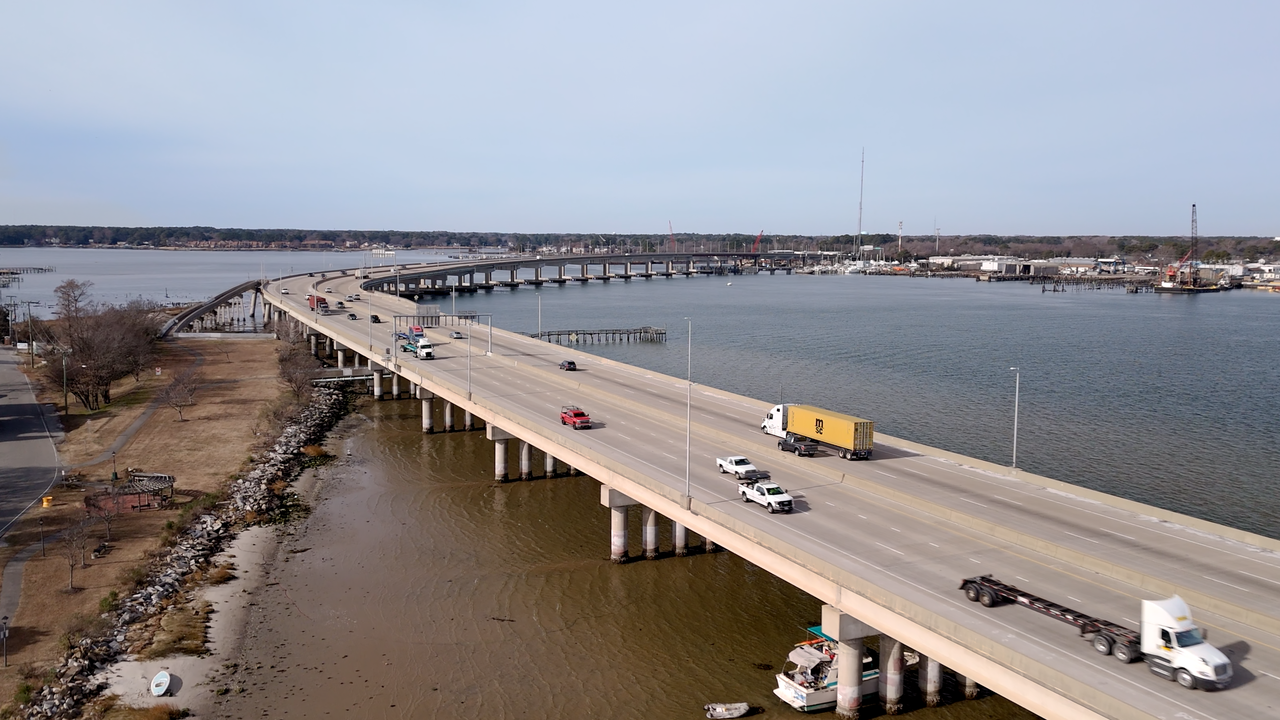
How the Hampton Roads Bridge-Tunnel Expansion Is Changing Freight Timing at the Port of Virginia
If moving containers through the Port of Virginia, the Hampton Roads Bridge-Tunnel expansion is not just a commuter story- it’s an operational variable that belongs in every dispatch plan, every drayage appointment, and every conversation about last free day timing at the Norfolk International Terminal and Virginia International Gateway.
At $3.9 billion, the HRBT expansion is the largest highway construction project in Virginia’s history. The goal is to expand I-64 from two lanes to four across the 3.5-mile bridge-tunnel corridor between Hampton and Norfolk. When complete, that corridor will carry the same 100,000-plus daily vehicle movements with significantly more capacity. Getting there, however, means years of lane reductions, weekly overnight closures, ramp detours, and shifting traffic patterns across the primary I-64 route that serves both terminal approaches.
For carriers and shippers operating in and out of NIT and VIG, the construction timeline matters as much as the completion date. Here is what is happening, how it affects port freight, and what you can do to protect your cargo from the timing exposure the project creates.
What the HRBT Expansion Project Is and Where It Stands
The expansion adds two new bored tunnels beneath Hampton Roads harbor, each approximately 45 feet in diameter and three new bridge spans to accommodate the widened roadway. The tunnel boring machine known as Mary completed both new tunnel tubes in fall 2025, breaking through on the second bore after beginning the first in spring 2023. Mary has since been disassembled and returned to Germany, and the interior tunnel work converting the raw bores into drivable roadways are now underway.
Above ground, new bridge spans are nearing completion. According to VDOT’s July 2026 construction update, the first phases of new westbound lanes on I-64 in Norfolk began opening on July 27, 2026, with traffic shifted to newly widened roadway from Oates Creek to Bay Avenue.
VDOT and project contractor Hampton Roads Connector Partners have targeted Fall 2026 for opening the new structure, with full substantial completion projected into 2027. Weekly lane closure alerts will continue to be published by VDOT’s Hampton Roads district every Friday, and long-term continuous lane reductions on I-64 between Settlers Landing Road and LaSalle Avenue remain in place through construction.
How HRBT Lane Closures Affect Freight Movement in Hampton Roads
The impact on commercial freight is not limited to slower travel times through the construction corridor. The more significant issues for port drayage is that the weekly and long-term lane restrictions alter the reliable timing of terminal approaches, and that timing uncertainty works directly against the tight windows that port freight operates within.
The table below summarizes the current active restrictions most relevant to carriers approaching NIT and VIG.
| Route / Corridor | Current Restriction | Freight Impact |
| I-64 Hampton Roads Bridge-Tunnel (both directions) | Continuous single-lane reduction between Settlers Landing Rd and LaSalle Ave; overnight lane closures and ramp detours on a weekly basis through completion | Increased congestion during morning and late-afternoon port delivery windows; gate access timing from Hampton-side routes compressed |
| I-64 westbound Norfolk — new lanes | First new westbound lane phases opened July 27, 2026 as traffic shifted to newly widened roadway from Oates Creek to Bay Avenue | Short-term lane shifts and signage changes around 1st View St and Mason Creek Rd bridges while remaining work completes |
| I-564 East / Little Creek Road interchange | Long-term traffic shift on I-564 east off-ramp to Little Creek Road; lane reduction on East Admiral Taussig Blvd | Affects routing to Norfolk International Terminal from the north; carriers should allow additional transit buffer on this approach |
| I-564 East / Little Creek Road interchange | Long-term traffic shift on I-564 east off-ramp to Little Creek Road; lane reduction on East Admiral Taussig Blvd | Dispatchers routing trucks from south Norfolk toward the tunnel must use alternate on-ramp approach via Thole Street |
What the table above does not capture is the compounding effect. A carrier approaching the tunnel from Hampton during a single-lane restriction, hitting a ramp closure at Tidewater Drive, and then encountering a lane shift near the 1st View Street bridge is not facing one delay. That driver is navigating three overlapping constraints within a two-mile corridor. For a drayage move where the appointment window at the terminal is 60 to 90 minutes, that compounding effect is meaningful.
The Demurrage Risk at NIT and VIG When Pickup Timing Slips
The connection between HRBT construction delays and demurrage charges is direct. At NIT and VIG, containers moving in the import stream accumulate demurrage from the ocean carrier once the free time window expires, typically three to five business days from vessel discharge. Every day past that window carries a charge, and those charges compound daily regardless of the reason the container was not picked up.
When a driver’s approach to the terminal is delayed by construction congestion and a same-day appointment is missed, the shipper is left with two options: rebook for the following day, absorbing another day of demurrage, or dispatch a second driver later in the day if availability allows. Neither outcome was in the original plan, and both carry cost.
The risk is highest on containers already close to their last free day. A container with one day of free time remaining and a terminal appointment in the afternoon window has no margin if the HRBT approach adds 45 minutes to the driver’s transit time. That is not a hypothetical scenario during active construction. It is a routine exposure for any carrier moving freight across the I-64 corridor in 2026.
For a full breakdown of how demurrage and detention charges calculate at the Port of Virginia and what free time windows typically look like by carrier, the guide to demurrage vs. detention charges covers the mechanics in detail.
How Shippers Should Adjust Their Planning Right Now
The construction timeline is not going away in the near term. Fall 2026 is the target for the new structure to open, but the interior tunnel work and remaining bridge spans mean that lane restrictions and traffic shifts will continue through that window. Shippers and logistics operators moving freight through Hampton Roads need planning practices that account for that reality.
- Build a transit buffer into every terminal appointment. The standard assumption that a driver departing at a given time will arrive within a predictable window is less reliable during active HRBT construction. Particularly for afternoon appointments near the end of the operating day, that 30 to 45 minute buffer needs to be in the dispatch plan, not treated as a backup.
- Check VDOT’s weekly traffic alerts before each dispatch. VDOT publishes new HRBT lane closure alerts every Friday at hrbtexpansion.vdot.virginia.gov/traffic-alerts. Closure patterns shift week to week as construction phases change. A ramp that was open last Tuesday may be closed this Tuesday, and the detour route changes the approach timing to the terminal.
- Identify containers approaching their last free day and prioritize them for early window appointments. The safest HRBT approach for time-sensitive containers is a morning appointment before afternoon lane restriction effects compound with general traffic volume. Containers with two or fewer days of free time remaining should be booked for the earliest available terminal window.
- Use container yard storage to remove containers from terminal demurrage exposure when timing is uncertain. Moving a container to a secure off-terminal yard after pickup stops the demurrage clock immediately and removes the container from the terminal’s congestion equation. If the receiving facility is not ready to accept the delivery, a Norfolk or Portsmouth yard holds the container without daily terminal charges accumulating.
- Communicate last free dates to your drayage carrier at the time of booking, not the day before. Carriers who know the LFD at the point of load tendering can plan the route, appointment window, and driver assignment with the right buffer from the start. Last-minute LFD communication forces a reactive dispatch approach, which is the highest-risk scenario during a construction period when timing margin is already reduced.
- For rail drayage moves connecting to inland destinations via the Norfolk Southern or CSX intermodal facilities, note that the HRBT corridor also affects routing between the port and inland rail ramps. Confirm with your carrier whether the planned routing uses the I-64 corridor and build the same buffer into intermodal transfer timelines.
What Century Express Virginia Is Doing to Maintain Turn Times
Century Express Virginia has operated from the Port of Virginia since 2007. That means the team has navigated every phase of HRBT construction that has affected freight movement along I-64, and the current expansion phase is part of that ongoing operational awareness. Drivers who work the NIT and VIG gates daily know which approaches are restricted, which ramps have active closures, and how the alternate routing from Tidewater Drive, I-564, and the south Norfolk corridors compares on any given day.
That local knowledge is not something that can be substituted by a GPS routing app updated weekly. It is the accumulated pattern recognition of a team that runs the same terminals day after day, watching how construction shifts change approach timing across seasons and phases. When a new lane shift goes into effect on a Monday morning, the dispatchers and drivers at Century Express Virginia know about it before the first appointment of the day.
The dual yard locations in Norfolk and Portsmouth give shippers a practical tool for managing the timing uncertainty the expansion creates. For containers that cannot be delivered immediately after pickup, those yards absorb the container off-terminal, stop the demurrage clock, and hold it until the delivery window is ready. That flexibility matters more during active construction than during a normal operating period.
If you are moving port drayage through Hampton Roads right now and your current carrier is not accounting for HRBT construction timing in dispatch planning, that is a gap worth addressing before peak season freight volumes arrive. Century Express Virginia is accessible seven days a week and can assist with port drayage, refrigerated drayage, hazmat drayage, and transloading across the Port of Virginia terminals.
To understand how drayage works within the broader port logistics picture at NIT and VIG, the complete guide to port drayage covers the mechanics from vessel discharge through final delivery.
Contact the Century Express Virginia team today to talk through how HRBT construction timing affects your port freight. We are accessible seven days a week at (757) 494-9200, or reach out through the contact page.