
Hazmat Shipping Papers: IMDG to 49 CFR at the Port
How Refrigerated Containers Work at the Port
CE Dispatch
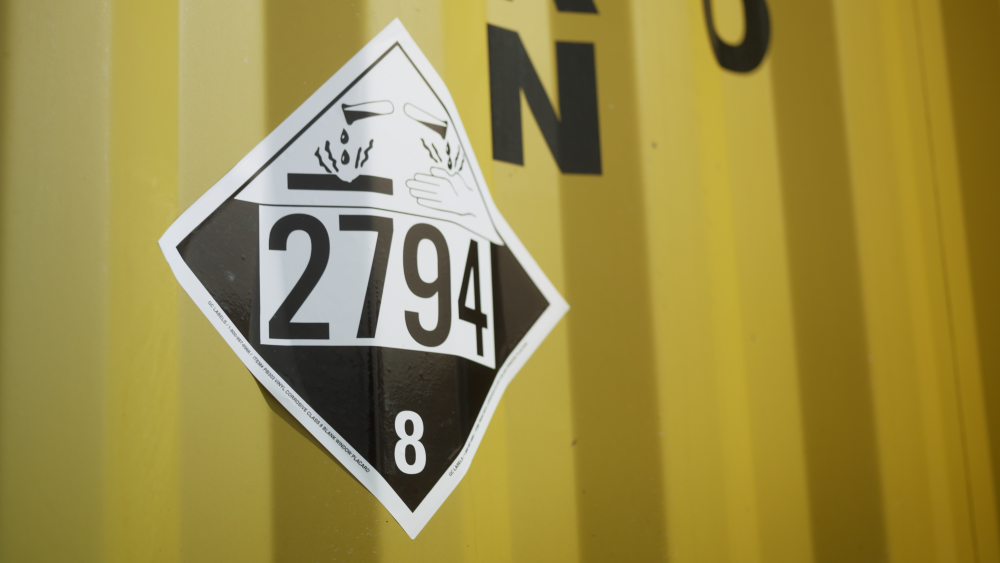
Hazmat Shipping Papers and the IMDG Code: What Changes When Your Container Leaves the Terminal
A hazmat container arriving at Norfolk International Terminal crossed the ocean under one rulebook and leaves the gate under a different one. The cargo does not change. The classification does not change. The paperwork obligations do, and the shippers who get caught out are almost never the ones shipping something exotic. They are the ones who assumed the dangerous goods declaration that satisfied the ocean carrier would satisfy the driver, the terminal, and a roadside inspection.
Hazmat shipping papers under 49 CFR and the Dangerous Goods Declaration under the IMDG Code are related documents serving the same cargo, but they are not interchangeable. Understanding where they overlap and where they diverge is the difference between a container that moves on schedule and one that sits at the terminal while a compliance problem gets resolved.
Two Rulebooks, One Container
Three regulatory frameworks govern dangerous goods by mode: the IATA Dangerous Goods Regulations for air, the International Maritime Dangerous Goods Code for ocean, and Title 49 of the Code of Federal Regulations for United States ground transport. An import container moving through the Port of Virginia touches two of them in sequence.
|
|
Ocean Leg (IMDG Code) |
Road Leg (49 CFR) |
|
Governing body |
International Maritime Organization |
U.S. Department of Transportation, administered by PHMSA |
|
Primary document |
Dangerous Goods Declaration, commonly on the Multimodal Dangerous Goods Form under IMDG Chapter 5.4, plus a container packing certificate |
Shipping paper under 49 CFR Part 172 Subpart C, usually the bill of lading carrying the hazardous materials entries |
|
Hazard classes |
Nine classes |
The same nine classes, which is why shippers assume the paperwork transfers |
|
Emergency information |
EmS emergency schedule numbers |
A monitored 24-hour emergency response telephone number, under Subpart G |
|
Stowage and segregation |
IMDG segregation tables govern placement aboard the vessel |
Incorporated into the 49 CFR Hazardous Materials Table at Column 7(c) |
|
Who carries it |
Filed with the ocean carrier before the container is accepted for carriage |
Must be physically in the cab with the driver for the entire move |
The trap is in the third row. Both frameworks use the same nine hazard classes, which makes them look more compatible than they are. A shipper who sees Class 8 on the ocean declaration and Class 8 on the domestic paperwork reasonably concludes the documents say the same thing. The classification matches. The document requirements do not.
What Hazmat Shipping Papers Must Contain Under 49 CFR
Neither 49 CFR nor the IMDG Code prescribes a single mandatory form. Both specify required content, and 49 CFR is specific about the order in which the basic description must appear. Under 49 CFR 172.202, the proper shipping description must run in this sequence: identification number, proper shipping name, hazard class or division, and packing group.
Beyond the basic description, a compliant shipping paper carries the total quantity of hazardous material, a monitored emergency response telephone number reachable 24 hours a day, emergency response information, and the shipper’s certification. That certification is a legal declaration, and the person signing it must be a principal, officer, partner, or employee of the shipper or its agent, with current hazmat training under 49 CFR 172.702 through 172.704. Hazmat employee training must be repeated at least every three years.
Three practical requirements catch importers repeatedly. All shipping paper entries and package markings must be in English, though additional languages are permitted alongside. The shipping paper must be physically in the cab with the driver for the entire move, not emailed, not in a portal. And the importer carries an affirmative duty to notify the foreign shipper of additional United States requirements, which means a documentation failure originating overseas is still the importer’s problem at the gate.
Where the Two Frameworks Diverge, and What Section 171.22 Says
Section 171.22 of 49 CFR is the interface between the two regimes, and it sets out rules worth knowing before a container books rather than after it lands.
- The DOT permits use of the IMDG Code within the United States, but attaches additional requirements covering emergency response information, incident reporting, packaging for export shipments, and training and security provisions.
- If 49 CFR regulates a commodity and the IMDG Code does not, 49 CFR must be used. An ocean declaration that was complete and correct for the voyage can still be insufficient for the road leg.
- If the IMDG Code regulates a commodity and 49 CFR does not, the material may still be shipped as a hazardous material domestically.
- Material forbidden under 49 CFR cannot be shipped under the IMDG Code. There is no route by which international acceptance overrides a domestic prohibition.
Stowage and segregation deserve a note of their own. The IMDG Code’s segregation requirements for incompatible materials have been incorporated into the 49 CFR Hazardous Materials Table. For a single-commodity container this rarely matters. For consolidated loads, or where a shipper is combining dangerous goods with general cargo, it governs what can legally travel together.
The Nine Dangerous Goods Classes
Both frameworks sort regulated materials into the same nine classes. Knowing which class a commodity falls into determines placarding, segregation, driver endorsement requirements, and in several cases whether a terminal will accept the container at all.
|
Class |
Category |
Typical Port of Virginia Examples |
|
1 |
Explosives |
Fireworks, ammunition, blasting agents |
|
2 |
Gases |
Propane, anhydrous ammonia, aerosols, refrigerant gases |
|
3 |
Flammable liquids |
Paints, solvents, alcohol, fuel additives |
|
4 |
Flammable solids |
Matches, certain metal powders, self-heating substances |
|
5 |
Oxidizers and organic peroxides |
Fertilizer compounds, pool chemicals, bleaching agents |
|
6 |
Toxic and infectious substances |
Pesticides, agricultural chemicals, diagnostic specimens |
|
7 |
Radioactive material |
Medical isotopes, industrial gauges |
|
8 |
Corrosives |
Sulfuric acid, sodium hydroxide, battery fluid |
|
9 |
Miscellaneous |
Lithium batteries, elevated temperature materials, marine pollutants |
Class 9 is worth watching. Lithium batteries sit here, and they now move through the Port of Virginia in volume inside consumer electronics, power tools, electric vehicles, and energy storage equipment. Shippers who do not think of themselves as hazmat shippers increasingly are.
Where Hazmat Container Moves Actually Fail
The failures that strand containers at the terminal are rarely exotic. They cluster in a short list of documentation problems.
- An incomplete shipping paper. Missing the proper shipping name, the UN identification number, the packing group, the total quantity, or the emergency response telephone number is enough to fail a 49 CFR check even when the ocean paperwork was flawless.
- A mismatch between the ocean declaration and the domestic paperwork. This is the most common friction point on inbound hazmat, and it is the one an experienced drayman catches before the container leaves the gate by escalating to the terminal’s hazmat coordinator rather than after the fact.
- An unreachable emergency number. A number that rings to a desk phone on weekdays does not satisfy a 24-hour monitoring requirement. Verify it is answered before it appears on a document.
- A missing container packing certificate. Where dangerous goods are packed into a container, the certification that packing complied with the applicable provisions of 49 CFR and the IMDG Code is a separate obligation from the declaration itself.
- Expired signer training. The certification is only valid if the person signing holds current training. A three-year cycle lapses quietly, and nobody notices until an inspection.
The exposure is not trivial. Civil penalties for hazardous materials violations are assessed per violation and can run well into six figures, and a false certification carries exposure beyond the monetary penalty. Under these regulations, not knowing is not a defense. Confirm current penalty ranges with PHMSA when quantifying risk for a client.
Hazmat Staging and Storage in Hampton Roads
Documentation problems take time to resolve, and a container sitting at the terminal while they are worked out is accruing demurrage the entire time. The same applies when a receiving facility is not ready to accept a regulated load, or when segregation requirements mean a container cannot be delivered alongside what is already on the dock.
Having somewhere compliant to put a hazmat container while a paperwork issue clears is an underrated piece of the equation. Century Express Virginia operates secure yard storage at facilities in Norfolk and Portsmouth, which gives a regulated container a staging position off the terminal and stops the demurrage clock while the documentation is corrected.
Hazmat Drayage at the Port of Virginia
Hazmat drayage out of Norfolk International Terminal and Virginia International Gateway is not standard drayage with extra paperwork. It requires drivers holding current hazmat endorsements, equipment configured for the class being moved, placarding that matches the documentation exactly, and a carrier who reads the ocean declaration against the domestic shipping paper before dispatching rather than after a driver is turned away at the gate.
Century Express Virginia has operated at the Port of Virginia since 2007 and maintains a certified team for regulated freight. The company’s hazmat drayage service covers classification review, placarding, shipping paper verification, and route planning that accounts for population density and restricted corridors. As a bonded carrier with permits across 48 states, the company also handles regulated commodities that many drayage carriers decline, including alcoholic beverages under bond.
For shippers newer to container movement at the Port of Virginia, the guide to port drayage covers the standard move before regulated cargo requirements are layered on, and the glossary defines the terminology that appears on terminal and carrier documentation.
Having your dangerous goods containers handled by a certified hazmat carrier means the documentation gets checked against both rulebooks before a truck is dispatched. From planning to forecasting, Century Express Virginia is here to assist you.