
In-Cab Safety Technology and Veteran Drivers: How to Roll It Out Without Losing Your Best People
The Class 8 EV Infrastructure Deficit
Industry News
In-Cab Safety Technology and Veteran Drivers: How to Roll It Out Without Losing Your Best People
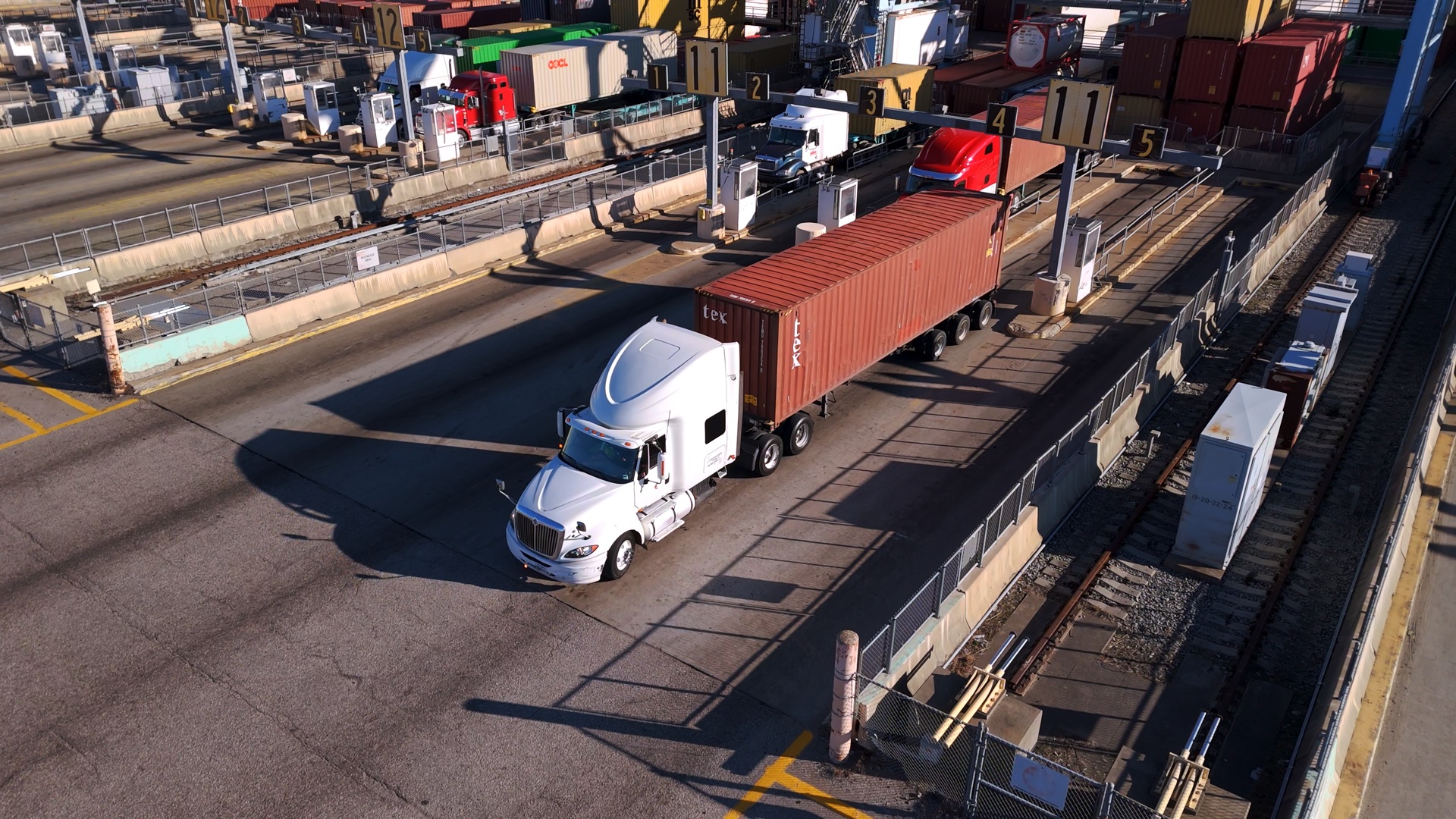
In-cab safety technology works. Driver-facing cameras, lane departure warnings, and fatigue detection reduce crashes and help carriers in court, and insurers now price policies as if every truck has them. The hard part is not the technology but the rollout. Veteran drivers who have kept clean records for twenty years without being monitored may see these systems as a sign of distrust. Introduce them carelessly, and you risk losing your most experienced drivers, the ones who are hardest to replace.
That risk is not hypothetical. One Pennsylvania carrier reported that new hires quit during orientation once they learned driver-facing cameras were installed. In a market where the driver pipeline is already tightening, a rollout handled badly can cost more in turnover than the technology saves in claims. For drayage operators at the Port of Virginia, where terminal knowledge and gate familiarity take years to build, that trade is especially poor.
Why Veteran Drivers Push Back on In-Cab Safety Technology
It is tempting to read driver resistance as generational stubbornness. The evidence does not support that reading and treating it that way almost guarantees a difficult rollout.
Research from the American Transportation Research Institute (ATRI), published as Issues and Opportunities with Driver-Facing Cameras, found that driver mistrust of inward-facing systems is widespread and grounded in specific, addressable complaints rather than vague discomfort. ATRI noted that these concerns are largely unique to trucking. School, transit, and charter bus fleets install driver-facing cameras with far less friction. The difference is the nature of the workspace. A truck cab is not a bus cockpit at the end of a shift. Drivers eat in it, rest in it, and for long haul operations sleep in it.
Trainers who work across fleets have made a related observation: the divide tracks experience more closely than age, and the real issue is often perception rather than privacy in the strict sense. A driver with two decades of incident-free work reasonably asks what problem is the camera is solving in their truck. If the answer is delivered as a policy announcement rather than a conversation, the implied answer is that management no longer trusts their judgment. That is the message that drives people to a competitor.
What the Research Says About Specific Objections
The useful finding in the ATRI work is that driver objections are specific enough to design around. Drivers rated driver-facing cameras across safety, litigation, privacy, and overall approval, and the pattern of responses points toward concrete configuration choices.
| What Drivers Object To | What Is Actually Driving It | What Resolves It |
| Continuous recording inside the cab | The cab functions as a workspace and, for many drivers, a rest area. Continuous capture feels categorically different from road-facing video. | Event-based recording that triggers only on a detected incident. ATRI found drivers rated event-based systems measurably better on privacy than continuous ones. |
| Not knowing when the camera is active | Drivers reported cameras activating with no apparent trigger and managers referencing footage from off-duty periods. | A visible, trustworthy recording indicator and a written policy stating exactly when the system records and when it does not. |
| Footage used only when something goes wrong | If video surfaces only in disciplinary conversations, drivers reasonably conclude the system exists to build a case against them. | Use footage proactively for coaching and exoneration. ATRI found drivers cleared by camera evidence held significantly more favorable views of the technology. |
| Biometric capture | Facial geometry and similar identifiers used for system login raise concerns that go beyond video and carry state law exposure. | Decline biometric collection where it is not operationally necessary, and state that policy in writing. |
The exoneration finding deserves particular attention. Drivers who had been involved in litigation where driver-facing footage was used held notably more positive views of the technology than drivers who had not. The camera that felt like surveillance became the camera that proved they were not at fault. Carriers that surface those outcomes internally, with the driver’s permission, convert the strongest possible advocates.
The Rollout Mistakes That Cost Fleets Drivers
Most failed technology rollouts in trucking share a small number of avoidable errors.
Leading with the insurance justification
Inward-facing camera requirements frequently originate with the insurance carrier, and it is tempting to present it that way because it is true and it deflects responsibility. It also tells the driver that the company installed a camera in their workspace because someone else said so, not because leadership thought it through. Drivers hear that as an absence of advocacy on their behalf.
Announcing instead of consulting
A memo stating that cameras will be installed beginning next month produces a very different result than a conversation with senior drivers three months earlier asking what would make the system tolerable. The second approach costs more time and produces materially better retention. It also surfaces legitimate operational objections that management would otherwise discover after installation.
Leaving the policy unwritten
Legal guidance on commercial vehicle camera use consistently points to the same baseline: notify drivers in writing, and explain specifically how footage will be used, who can access it, and how long it is retained. Courts have generally upheld camera use in commercial vehicles where carriers provided proper notice and used the technology for legitimate safety purposes. An unwritten policy fails that standard and leaves drivers to assume the worst about scope.
Treating state law as uniform
Privacy requirements vary meaningfully between states, and biometric statutes in particular create exposure that general video policy does not cover. Carriers running interstate lanes should confirm requirements across their operating footprint rather than applying a single state’s standard everywhere.
Automated Scheduling and the Autonomy Question
Dispatch automation provokes a different objection than cameras, and it is one carriers frequently underestimate. Camera resistance is about privacy. Scheduling resistance is about competence.
Experienced drivers who know their routes push back on algorithm-generated assignments because the assignment implicitly claims to know the work better than they do. In drayage that claim is often wrong in ways the software cannot see. A veteran driver at Norfolk International Terminal or Virginia International Gateway knows which gate lanes move faster at which hours, how a particular chassis pool behaves when volume spikes, and which receivers will hold a truck past the scheduled window. Early automated assignments that ignore this knowledge do not read as efficient. They read as uninformed.
There is a real structural risk here as well. Industry observers have noted that as dispatch operations automate, they can become more rigid, leaving drivers less room to negotiate terms or flag problems with a human dispatcher. A system that removes the conversation removes the mechanism by which experienced drivers have always contributed operational intelligence.
The practical answer is sequencing. Guidance from dispatch software implementations consistently recommends starting with a pilot group of willing drivers rather than a fleet-wide cutover, and reports that initial resistance commonly resolves within one to two weeks once drivers see fewer wasted miles and clearer stop sequencing. The first thirty days determine whether adoption holds. Data quality matters as much as the software: automated systems are only as good as the information fed into them, and errors that reach a driver’s assignment screen destroy credibility faster than any feature earns it.
At the port specifically, automated tooling has a genuine advantage worth naming to drivers. Truck appointment systems and predictive dispatch that match containers to drivers based on vessel and customs status help trucks arrive when a container is actually available rather than when a spreadsheet guessed it would be. That directly reduces wasted trips and demurrage exposure. Framed as a tool that stops sending drivers to the terminal for containers that are not ready, automation becomes something drivers want rather than something done to them.
A Rollout Approach That Protects Retention
Across both categories of technology, the carriers that keep their drivers through a rollout tend to follow a recognizable pattern.
- Bring senior drivers in before the decision is final. Ask the drivers with the longest tenure and cleanest records what would make the system workable. Their objections are the ones that predict fleet-wide reaction, and their endorsement carries weight no management communication can match.
- Choose event-based recording over continuous where the technology allows it. The privacy difference is meaningful to drivers and measurable in the research, and for most safety and liability purposes event-triggered capture is sufficient.
- Put the policy in writing before installation, not after. Specify what records, when, who reviews it, how long it is retained, and what will never be reviewed. Written limits are what make the commitment credible.
- Use the first footage for exoneration and coaching, not discipline. The tone of the first several reviews sets the interpretation of the entire program. A driver cleared by video in month one is worth more to adoption than any policy document.
- Pilot scheduling tools with volunteers and fix the data before scaling. A small group working through the errors protects the broader rollout from the credibility damage that bad assignments cause.
- Keep a human in the dispatch loop. Drivers need a person to call when the algorithm is wrong. Preserving that channel preserves both the operational intelligence and the relationship.
Why This Matters More in Drayage Right Now
The driver pool serving U.S. ports is under structural pressure. CDL training capacity has contracted sharply, regulatory changes have narrowed the pool of eligible drivers, and the broader shortage continues to weigh on capacity. The full picture is covered in the analysis of CDL school closures and the tightening driver pipeline and in the assessment of what the 2026 driver shortage means for Port of Virginia shippers.
In that environment, replacement cost governs the technology decision as much as claims cost does. A drayage driver who knows the terminals, holds the right endorsements, and has established gate familiarity is not quickly replaced at any price. Technology that improves safety metrics while pushing that driver toward a competitor is a net loss the safety dashboard will not show.
The Century Express Virginia Approach
Century Express Virginia has maintained some of the lowest driver turnover rates in the Hampton Roads region, and that record is not incidental to how the company evaluates new tools. Technology decisions here start from the same place every other operational decision does: whether it makes the work better for the people doing it and the freight safer for the customer depending on it.
That means involving drivers in evaluation rather than informing them of outcomes, writing down what a system does and does not capture, and being candid when a tool is being adopted for insurance or liability reasons rather than dressing it up as something else. Drivers recognize the difference immediately. For more on the broader technology picture and how Century Express Virginia thinks about it, the perspective on AI in trucking covers where these tools help and where caution is warranted, and the drivers page outlines what working with the company looks like.
Safety and driver respect are not competing priorities, and the carriers that treat them as a tradeoff usually end up short on both. The same principle applies across port drayage and the higher-consequence work in hazmat drayage, where experienced, well-trained drivers remain the controlling safety factor regardless of what equipment is installed in the cab.
If you are weighing how a carrier’s technology and safety practices affect the reliability of your freight, Century Express Virginia is here to assist you. The team is happy to walk through how drivers, equipment, and process work together on your lanes.
Contact the Century Express Virginia team today. We are accessible seven days a week at (757) 494-9200, or reach out through the contact page to start the conversation.