
Virginia Oversize Permits: What Port Shippers Must Know
In-Cab Safety Tech and Veteran Drivers: A Rollout Guide
Industry News
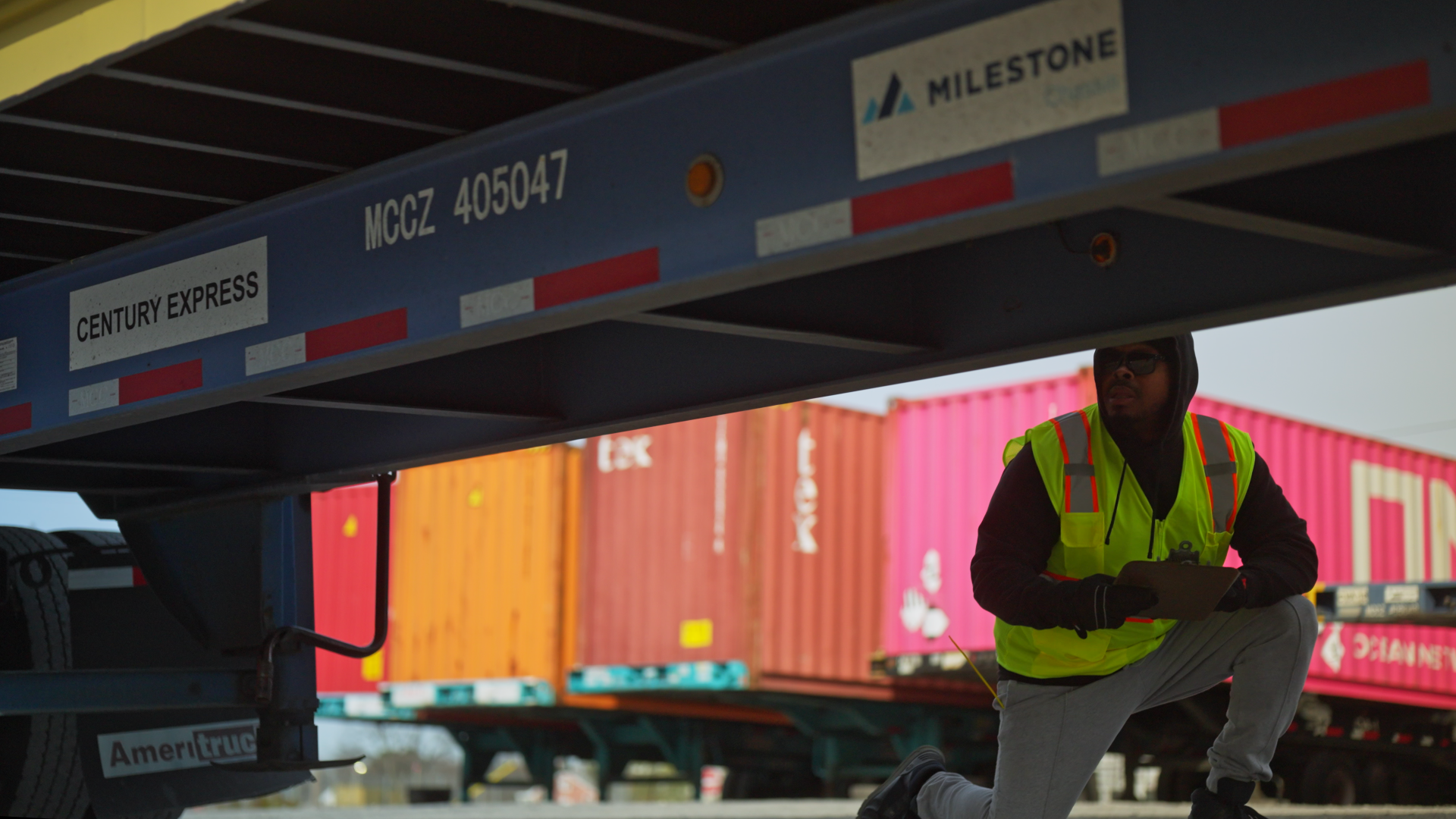
Virginia Oversize Permits in 2026: The Overweight Container Rules Port Shippers Keep Missing
Virginia oversize permits are among the more favorable in the country for containerized freight, and they are also among the most frequently left on the table. Shippers moving heavy containers through Norfolk International Terminal and Virginia International Gateway routinely treat the 80,000-pound federal ceiling as a hard stop, reduce a load, or pay to transload cargo that could have moved intact under a permit the Commonwealth already offers for exactly that situation.
Oversize and overweight permitting came back onto the regional agenda this year, with the Hampton Roads Planning District Commission’s freight advisory committee reviewing the Commonwealth’s OS and OW permit structure in May 2026, and Virginia’s Overload and Hauling Permits Regulation carrying a current revision date of October 2026. For anyone routing heavy containers out of the Port of Virginia, this is a good moment to confirm that what your carrier is doing matches what the rules actually allow.
Virginia’s Legal Weight Limits, and Where Container Freight Breaks Them
Before permits enter the conversation, the baseline matters. Virginia Code sets maximum weights that apply on every state-maintained highway, and a container move can comply with one limit while violating another.
|
Limit |
Virginia Maximum |
Why Container Freight Hits It |
|
Gross vehicle weight |
80,000 lb. |
Tractor and chassis consume roughly 34,000 to 36,000 lb., leaving about 44,000 to 46,000 lb. of legal payload before a permit is required |
|
Single axle |
20,000 lb. |
Rarely the binding constraint on a container move, but it governs how the load must be distributed |
|
Tandem axle |
34,000 lb. |
This is where enforcement most often catches container drivers. Cargo loaded toward one end of the box overloads a tandem group even when gross weight is legal |
|
Tri-axle group |
54,000 lb. |
The reason heavy containers move on tri-axle chassis. It spreads the same load across more axles |
|
Height |
13 ft 6 in |
A high cube container on a standard chassis sits close to this line. Chassis selection matters |
|
Width |
8 ft 6 in |
Standard containers comply. Flat rack and out of gauge cargo frequently does not |
Gross weight is also governed by axle spacing rather than a single number. A five-axle combination with 51 feet of spacing is allowed the full 80,000 pounds. Reduce that spacing to 47 feet and the allowance drops to 77,500 pounds. A three-axle vehicle with 20 feet of spacing is limited to 51,000 pounds, and at 17 feet of spacing to 48,500 pounds. Two trucks carrying identical cargo can be legal and illegal respectively based on nothing but how the axles sit.
The practical threshold for port work is straightforward. A 40-foot container carrying more than roughly 44,000 pounds of payload, or a 20-foot container above roughly 36,000 pounds, is going to need either a tri-axle chassis or a permit, and frequently both.
The Four Permit Types, and the One Most Container Shippers Overlook
Virginia hauling permits are issued by the Department of Motor Vehicles under Section 46.2-1139 of the Code of Virginia, with the Department of Transportation handling engineering review where a route requires it. Four categories matter for port freight.
- Single trip permit. Authorizes one movement on an approved route. This is the default for project cargo, flat rack machinery, and anything non-divisible moving once.
- Blanket permit. Multi-trip authorization for repeated qualifying movements. Carriers running consistent heavy lanes use these rather than filing per load.
- Exempt blanket permit. This is the one that gets missed. It is a multi-trip permit whose weight allowances are defined directly in the Code of Virginia, and the covered commodities explicitly include containerized cargo. A shipper who believes every heavy container requires an individually filed permit is working harder and paying more than the Commonwealth requires.
- Overload permit. Issued under Section 46.2-1128, it allows a vehicle to exceed otherwise applicable weight limits by 5 percent. Narrow, but occasionally the difference between a legal move and a reduced load.
Blanket and exempt blanket permits also carry transfer options, meaning a carrier can move the permit between a vehicle or a trailer rather than being locked to one unit. For a fleet cycling chassis across a heavy container program, that flexibility has real operational value.
Virginia also sits inside the Southern overweight corridor alongside Alabama, Arkansas, Florida, Georgia, Louisiana, Mississippi, North Carolina, South Carolina, and Tennessee. That corridor has historically supported sealed container permits allowing 40-foot containers to carry in the range of 48,000 pounds of payload, a meaningful increase over the unpermitted ceiling and a genuine competitive advantage for freight routing through Hampton Roads rather than a northern port.
Why a Tri-Axle Chassis Is Not a Permit
This confusion costs carriers money at the scale house. A tri-axle chassis distributes weight across an additional axle, which keeps an axle group legal under the 54,000-pound tri-axle maximum. It does not raise the gross vehicle weight ceiling, and it does not substitute for permit authority.
Axle groups are also where enforcement most often finds violations, because a container stuffed unevenly at origin can put a tandem group over 34,000 pounds while the gross weight reads comfortably legal. The driver has no visibility into how the box was loaded overseas. The right equipment paired with the right permit is what protects the move, which is why specialized equipment selection and permitting have to be decided together rather than sequentially.
What Virginia Oversize Permits Cost, and What Getting It Wrong Costs
Permit fees are modest relative to the exposure. Published figures put a single trip hauling permit at a $20 base fee, with a per mile charge in the range of 30 cents where the load exceeds legal weight. A superload single trip permit runs a higher base, and an annual blanket permit is commonly cited around $100 plus a mileage component where weight is involved. Fee schedules change, so confirm current rates with the DMV Hauling Permit Office before building them into a quote.
The penalty structure is what makes guessing expensive. Under Section 46.2-1134, fines are assessed on the weight in excess of what the permit authorizes, and the assessment escalates sharply. Exceed the limit by 25 to 50 percent and the assessment doubles. Exceed it by more than 50 percent and the assessment triples.
The direct fine is often the smaller cost. A container held at a scale misses its delivery appointment, may miss its terminal return window and begin accruing demurrage, and in the worst case has to be re-chassied on the shoulder or rerouted entirely. One stopped load can consume the permit savings of an entire quarter.
The Hampton Roads Details That Catch Out-of-Area Carriers
Several Virginia-specific conditions regularly surprise carriers who do not run the market routinely.
- A state permit covers state-maintained roads only. Cities, towns, and counties that have removed roads from the VDOT system can require their own permits within their limits. A valid state permit is not blanket authority across a full Hampton Roads route.
- Permitted loads face morning restrictions. Travel inside city and town corporate limits is generally restricted during the 7:00 to 9:00 a.m. window, which collides directly with first-shift terminal appointments.
- Oversize and overweight are governed differently. A load that is overweight only can generally move around the clock. A load that is also oversize faces daylight restrictions and no Sunday travel.
- Flat racks belong on container chassis. Virginia guidance is specific that flat racks should be hauled on a container chassis, which matters for out of gauge project cargo arriving through the terminals.
- Superloads trigger engineering review. Loads above 400,000 pounds gross require a vehicle schematic for VDOT analysis, and above 750,000 pounds the applicant must retain a Virginia-licensed engineer to analyze every structure on the route. These are long lead items, not same-week approvals.
Heavy Cargo Permitting at the Port of Virginia
Permit knowledge is not a back-office function in port drayage. It determines whether a heavy container moves intact, moves reduced, or does not move on schedule at all, and the decision usually has to be made before the container is even released.
Century Express Virginia has operated at the Port of Virginia since 2007 and maintains blanket permits in Virginia and surrounding states, which means heavy container moves out of NIT and VIG can often be scheduled without waiting on a filing cycle. The company’s heavy cargo permitting service covers route planning around posted structures and restricted corridors, permit selection matched to the move rather than defaulted to single trip, and coordination with the equipment the load actually requires.
Where a container genuinely cannot be permitted to destination, the alternative is worth evaluating early rather than at the gate. Transloading the cargo into domestic trailers removes the container weight from the equation entirely, and for some lanes it is cheaper than permitting even when a permit is available. Century Express Virginia also operates yard storage in Norfolk and Portsmouth, which gives a heavy container somewhere to sit while a permit or a route clears rather than accruing charges at the terminal.
Shippers newer to how these pieces connect may find the guide to port drayage a useful starting point before layering weight and permit considerations on top.
Having your overweight container moves handled by a carrier that permits them routinely is the difference between a load that clears the scale and one that sits on the shoulder. From planning to forecasting, Century Express Virginia is here to assist you.